The Osage Orange Tree
A Living Giant of Kentucky’s Frontier Past
One of the most iconic natural landmarks at Old Fort Harrod State Park is the massive Osage Orange Tree, believed to date back to the late 18th century, placing it among the oldest living trees in the region. This extraordinary specimen has stood witness to the earliest days of Harrodsburg—Kentucky’s first permanent settlement—and remains an enduring symbol of frontier resilience.
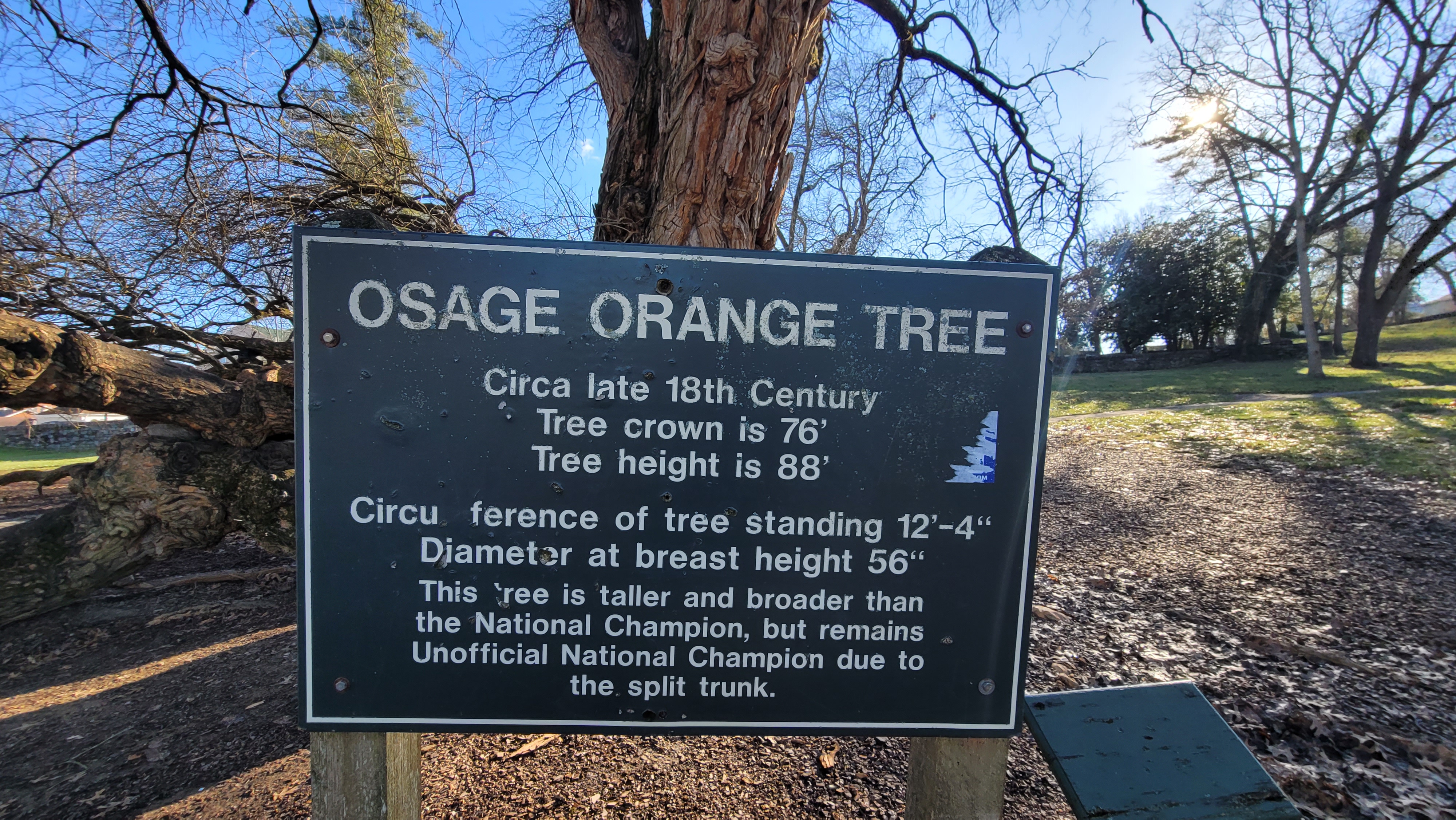
Towering at approximately 88 feet tall with a 76‑foot‑wide crown, the tree is remarkable not only for its age but also for its size. Its enormous trunk measures roughly 12 feet 4 inches in circumference, with a diameter of 56 inches at breast height. These dimensions make it taller and broader than the officially recognized National Champion Osage Orange, though it carries the title of Unofficial National Champion because its historic split trunk disqualifies it from formal competition.
The Osage orange (Maclura pomifera) is not native to Kentucky—it originates from the southwest, in what is now Oklahoma, Texas, and Arkansas. How this tree arrived at Fort Harrod remains a subject of speculation. Some believe early settlers brought it for use as hedgerows or natural fencing; others suggest that Indigenous peoples may have planted it for bow‑making, or that explorers brought seeds back from western expeditions. While its exact origins at the site remain a mystery, its presence speaks to the movement and ingenuity of early Americans.
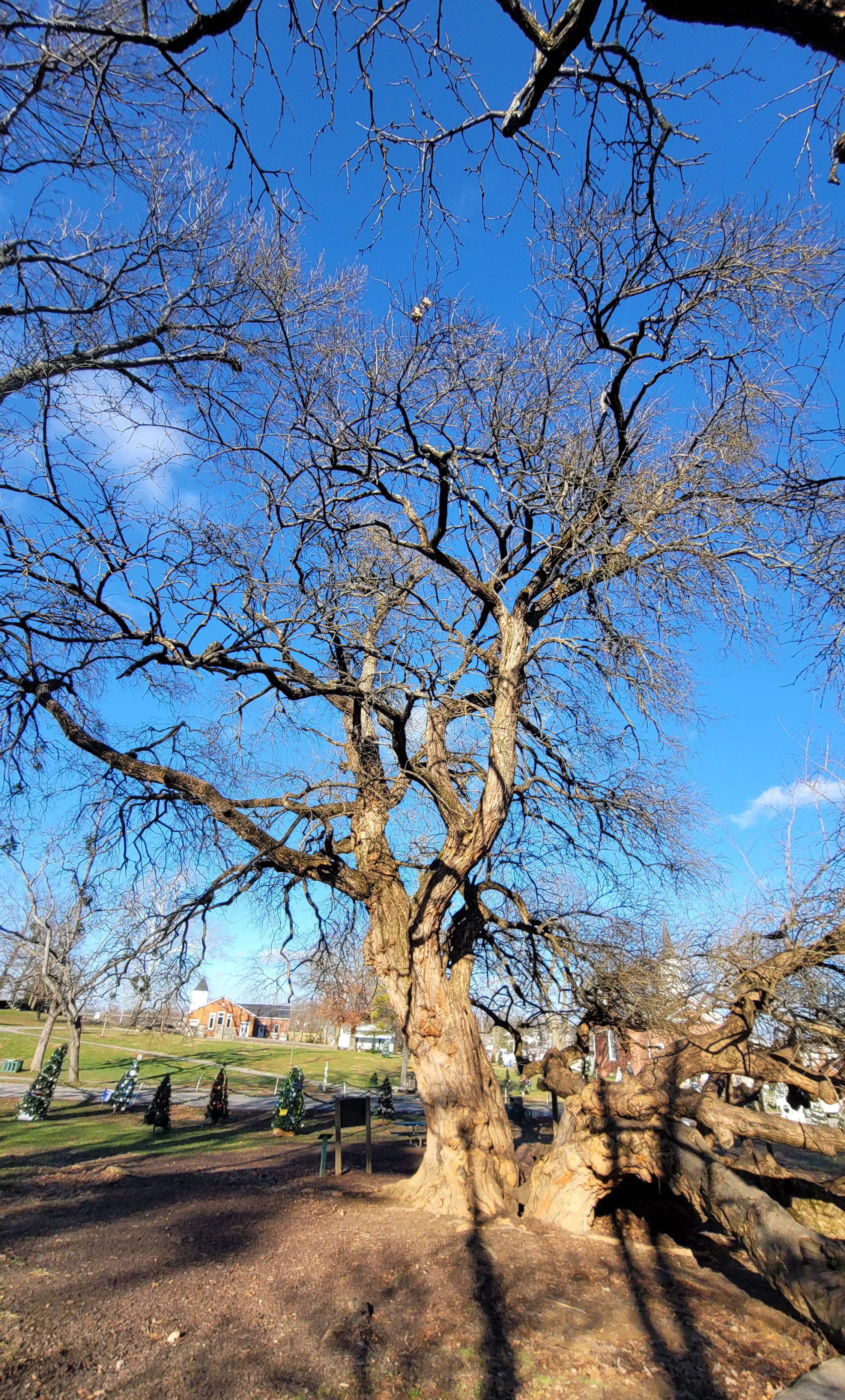
Today, the Osage Orange Tree is one of the park’s most cherished features. Visitors admire its massive, sprawling limbs and the sense of history it conveys. It is not only a botanical wonder but also a living reminder of the people and stories that shaped Kentucky’s earliest settlement.
Whether you’re exploring the reconstructed fort, strolling through Pioneer Cemetery, or visiting the Lincoln Marriage Temple, the Osage Orange Tree stands as a must‑see landmark—a natural monument linking past and present across more than two centuries.